
Think about the last time you walked into a tall building, drove over a bridge, or even stood on a concrete floor. Everything felt solid and strong, right? But here is something that most people never stop to think about – how does this concrete I am standing on do such an amazing job?
Hidden deep inside the concrete is actually a network of steel bars quietly doing the heavy lifting. Those bars are called rebar in concrete, and without them, the building you are standing on would not survive long.
In this post, we are going to break down what rebar is, why it is placed inside concrete, and why this combination is one of the smartest decisions in the history of construction.
What Exactly Is Rebar?
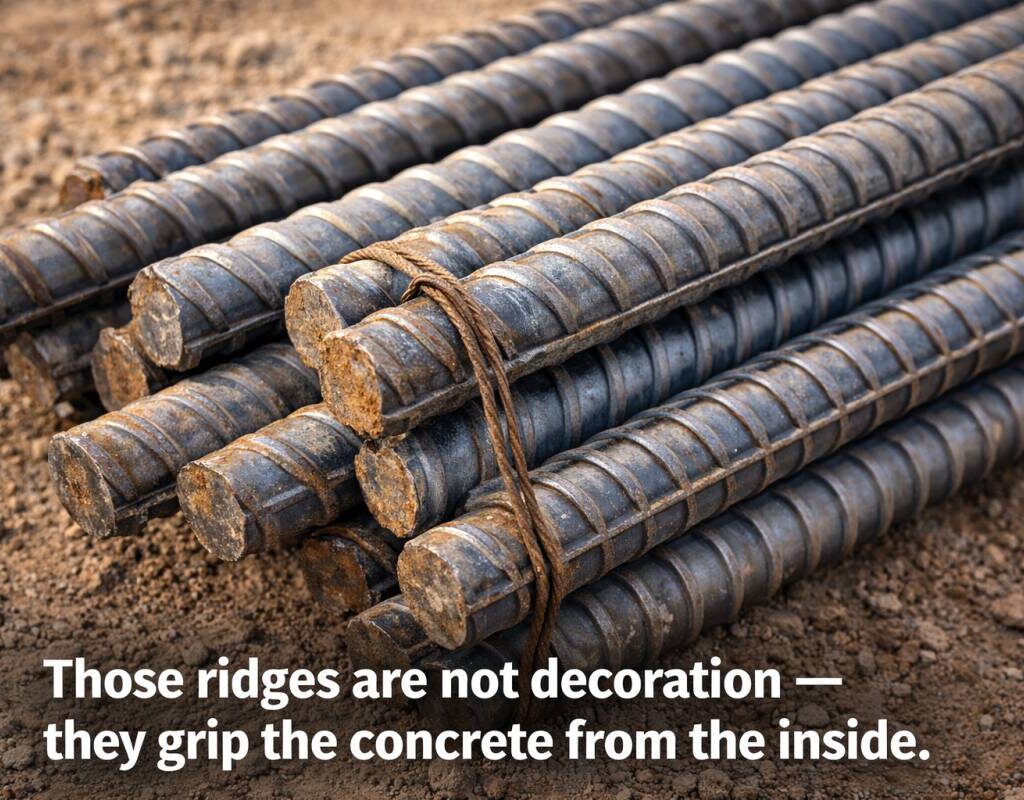
Rebar is short form for reinforcing bar. It is a steel bar usually with a ridged or textured surface that is placed inside concrete before the concrete sets and hardens. You have almost certainly seen these bars on a construction site, sticking out of the ground or tied together in a grid pattern before concrete is poured over them.
The ridged surface on rebar is not just for looks. Those ridges help the concrete grip the steel tightly so that the two materials bond together and work as one strong and permanent unit. If smooth bars were used, they would simply slide out.
Why Does Concrete Need Steel in the First Place?
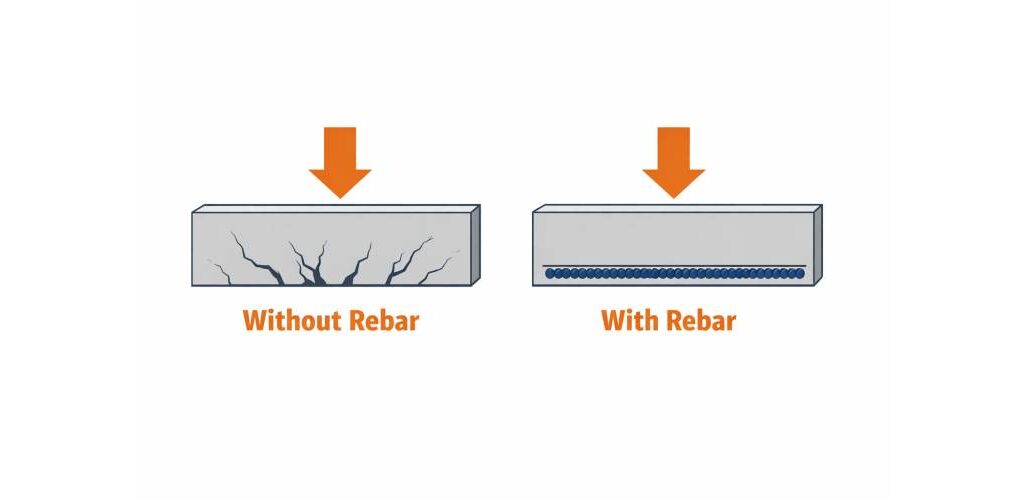
Here is what engineers know that most people do not: concrete is incredibly strong when weight is pressing down on it – compressive force, but it is very weak when it is being pulled apart or bent – tensile force. In fact, concrete is approximately 10 times weaker in tension than in compression.
Steel is the exact opposite – it handles tension brilliantly. So when engineers design rebar in concrete structures, they are strategically placing steel exactly where the tensile forces will be greatest. The concrete takes the compression. The steel takes the tension. Together, they create a material stronger than either could ever be alone.
Why Is Rebar Hidden Inside and Not on the Outside?
The concrete cover surrounding rebar in concrete is not accidental. It is a carefully calculated protection system. Here is why it is critical that the steel stays inside concrete:
- Protection from rust: Steel corrodes when it meets air and water. Concrete seals it off, preserving its strength for decades.
- Fire resistance: Steel loses strength quickly when heated. Concrete insulates the rebar, buying the building time during a fire.
- Structural continuity: Embedded rebar transfers loads evenly through the structure. Exposed steel would not achieve the same bonded effect.
Actionable Tips: What to Check on Your Construction Site
Whether you are a site manager, a building owner, or simply someone overseeing your own house construction, here are practical things to look out for when it comes to rebar in concrete:
- Check the concrete cover: Rebar should have at least 25–40mm of concrete between it and the outer surface. Too little cover means rust will show up faster.
- Ask about the rebar grade: Not all steel is the same. Make sure your contractor is using the rebar grade specified in the structural drawings.
- Inspect the tying: Rebar should be tied at intersections with wire. A loose rebar cage produces a weak structure.
- Ensure the cage does not touch the ground: Rebar chairs or spacers should be used to lift the cage off the ground before pouring.
- Verify bar spacing: Bars that are too far apart provide insufficient reinforcement. Check your drawings for the correct spacing.
Now you know the truth about rebar in concrete. It is not just steel buried inside cement. It is the backbone of every strong structure you use, live in, and trust with your life every single day.
Understanding how it works, why it is placed inside, and what can go wrong when it is done poorly puts you in a much stronger position whether you are building your own home, managing a site, or simply trying to understand the world of construction better.
Want to learn more about construction? Find more practical guides at civildude.com/blogs and explore our free construction tools at civildude.com/tools.
Join our community of construction enthusiasts who are ready to make our world a better place to live in through Civil Engineering.