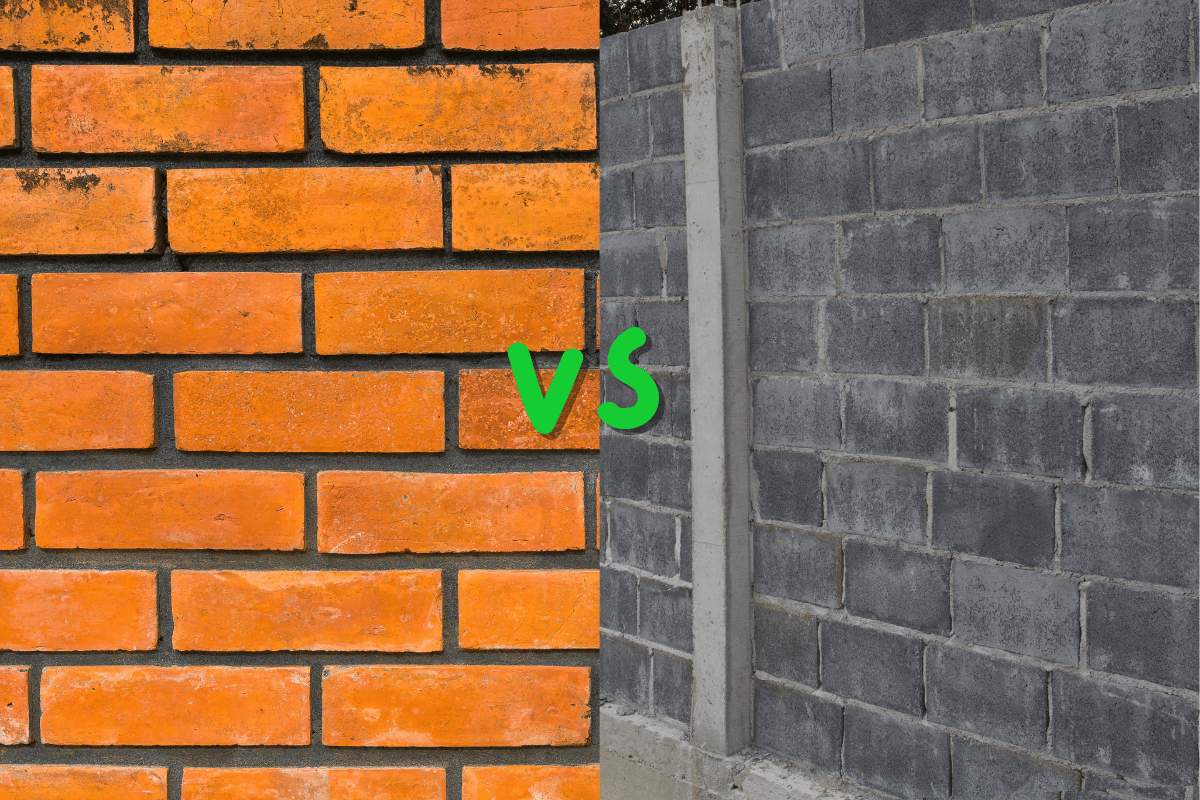
Have you’ve ever stood on a construction site or scrolled through home design ideas late at night and probably asked yourself “brick vs block – which is better?”
It sounds like a simple choice, but trust me its not that simple because of the different considerations one has to make.
This guide attempts to break down the real-world differences between brick and block. We’ll explore durability, thermal performance, cost, sustainability, and maintenance. By the end, you’ll know which option suits your climate, budget, and long-term goals.
What Are Bricks?
Bricks are clay units made from kiln fire known for their durability, aesthetic appeal, low maintenance and historical reliability.
What Are Blocks?
These are usually concrete masonry units (CMUs). They are larger, lighter, and faster to build with. Mostly they are finished with plaster or cladding.
Quick Comparison Table
| Feature | Brick | Block |
| Appearance | natural, warm, textured | Plain, modern (often plastered) |
| Strength | High compressive strength | Very high structural strength |
| Thermal Insulation | Good thermal mass | Moderate (can be improved) |
| Cost | Higher material + labor cost | Lower material + labor cost |
| Build Speed | Slower | Faster |
| Maintenance | Low | Moderate (finishes may degrade) |
| Sustainability | Energy-intensive firing process | Low energy required in curing process |
Comparison between brick vs block
1. Durability and Longevity
Brick durability
Brick buildings can easily last over 100 years with minimal upkeep according to the Brick Development Association. The fired clay is resistant to rot, insects, and UV damage
Block durability
Concrete blocks are structurally robust. They’re widely used for foundations and load-bearing walls. However, they rely heavily on surface finishes. If plaster cracks or paint peels, moisture can easily sneak in.
2. Thermal Performance and Comfort
Thermal performance is an easily ignored factor by many people yet it’s very important especially in extreme climates.
Brick thermal performance
Bricks have a high thermal mass. They absorb heat during the day from sunlight and release it slowly back to the air at night. This naturally stabilizes indoor temperatures.
Block thermal performance
Blocks have a lower thermal mass than brick which means heat moves through block walls faster. This leads to indoor temperatures changing more quickly when outdoor temperatures rise or fall.
3. Cost and Construction Speed
Brick costs
- Higher material cost since you have to purchase more bricks than blocks for the same area. This also means more mortar joints.
- High labor costs
- Slower building speed due to the many units involved
Block costs
- Lower material price due purchase of few blocks than bricks for the same area. This also means less mortar joints.
- Faster building due to less units involved
- Lower labor costs
While bricks cost more initially, their longevity and minimal maintenance often offset the upfront expense.
4. Aesthetics
As they always say “beauty lies in the hands of the beholder”, aesthetics depends from person to person but very influential. This is where emotion meets engineering.
Brick aesthetics
Bricks offer natural texture, warmth, and a timeless charm which rarely goes out of style.
Block aesthetics
Blocks look industrial unless covered. But once plastered or clad, they can mimic almost any design style
5. Maintenance Over Time
Brick maintenance
- Minimal cleaning since the bricks take long to get dirty.
- No repainting since the bricks are in their natural color and there is no plaster to repaint.
Block maintenance
- Need for plaster repairs since plaster wears out
- Need for repainting every few years to keep the aesthetics
- Risk of surface cracks especially if the plaster is not properly done
One builder told me that “brick demands patience upfront but block demands patience forever.”
6. Sustainability and Environmental Impact
Neither option is perfectly green. In both options there’s carbondioxide emission. The difference is in the emission levels of the two options.
Brick Sustainability
- High energy use during firing
- Has a higher embodied carbon per unit than blocks
- Long lifespan reduces replacement needs
Block Sustainability
- Often uses recycled aggregates
- Lower embodied carbon
- Require less energy to cure than bricks need to fire
7. Noise and Soundproofing
Brick walls are naturally dense and absorb sound better. If you live near traffic or noisy neighbors, brick can significantly improve acoustic comfort.
Blocks need extra insulation layers to match this effect of the bricks.
Conclusion
To sum up, the answer to our question today isn’t universal. It is a subjective one.
- Brick wins on durability, thermal comfort, soundproofing, and timeless aesthetics.
- Block wins on cost, speed, and design flexibility.
If the house you are planning is your forever home, brick might reward you for decades.
If it’s a rental or short-term investment, block could save you money today.
Ultimately, the best choice aligns with your climate, budget, timeline, and lifestyle.
Thinking about building or renovating?
Share your thoughts on brick vs block in the comments below and use our brickwork tool to estimate your quantities.
Join our community of construction enthusiasts who are ready to make our world a better place to live in through Civil Engineering.